WARLON PARTITION
In the traditional Japanese house, the separation between interior and exterior space is not
clearly defined. By a variety of means such as shoji, bamboo screens, the veranda, the
entranceway, the perception of being inside or outside the house is rather ambiguos.
Inside the house sliding doors (fusuma), enable spaces to be enlarged or reduced.
depending on the season of the year, or the time of the day, on the number of guests, or
the activity taking place in that space.
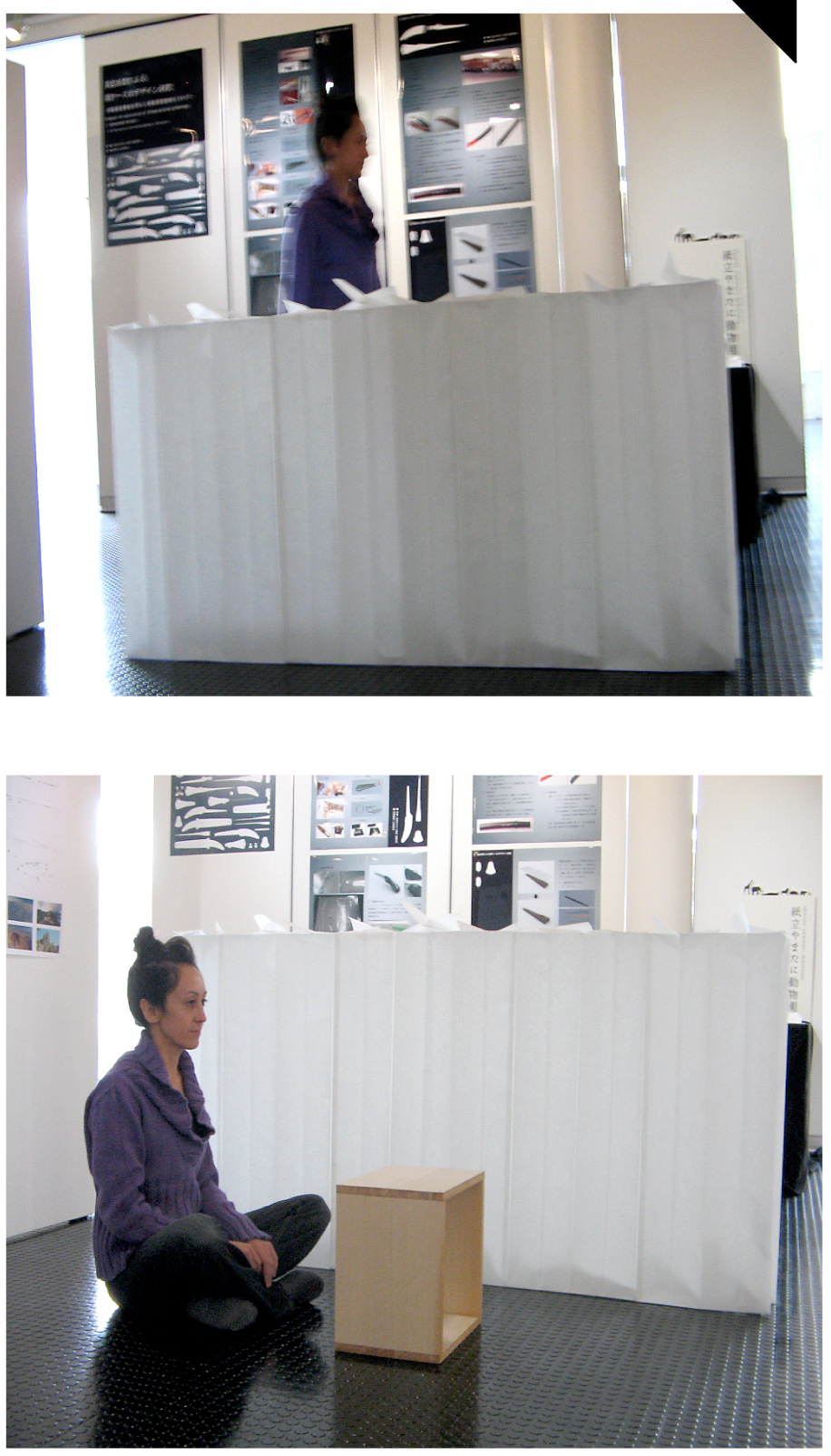
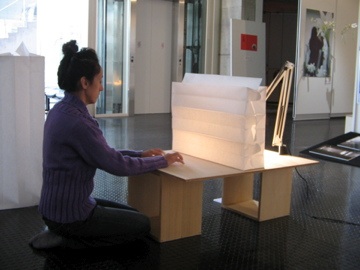
This white, warlon partition, is a folding screen that can be used in any interior space, to
separate different activities, generating different atmospheres, allowing flexibility in the
use of space.
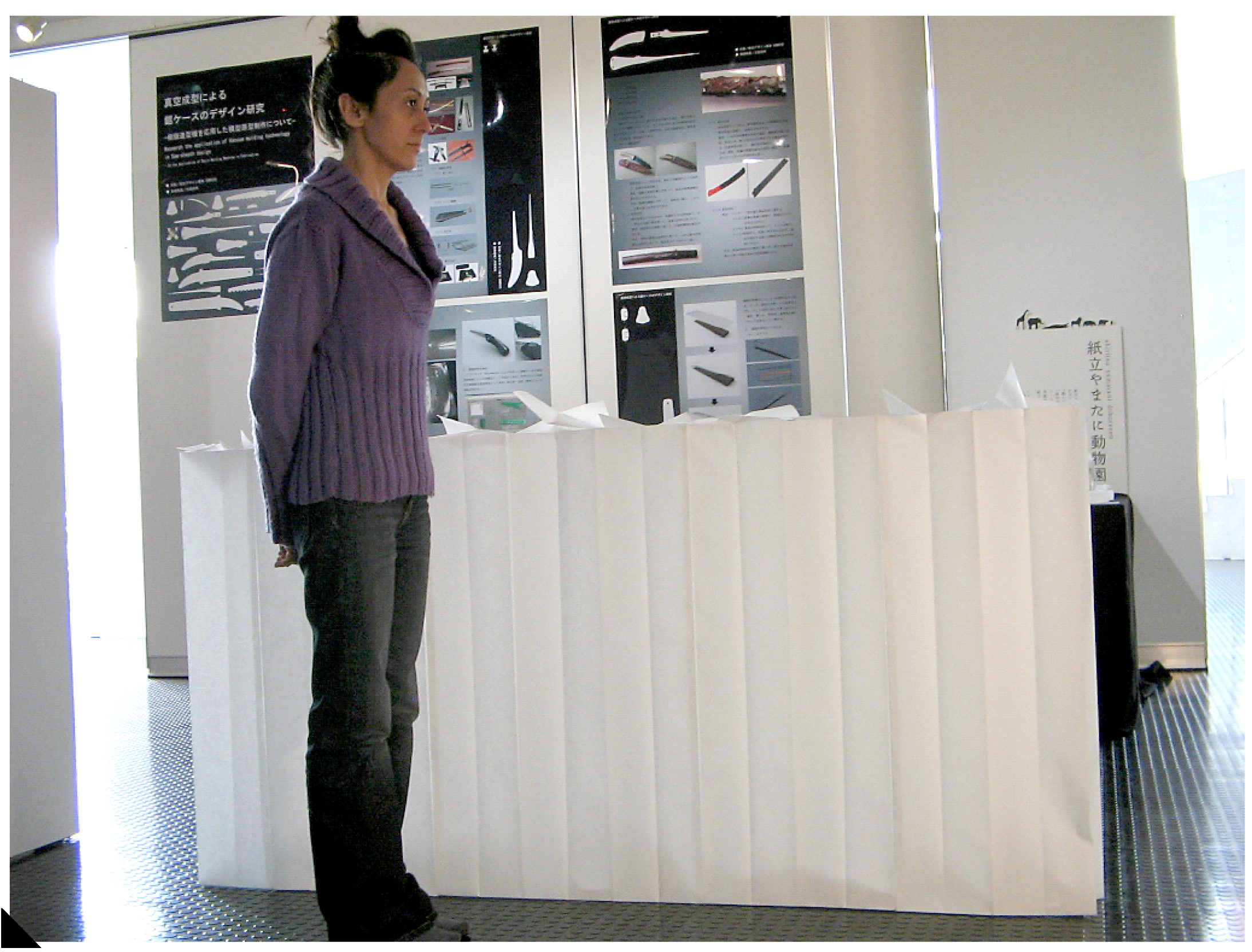
Warlon as Material;
The material used for this partition, Warlon, is a vinyl sheet cover with washi paper on both sides.
This material is used in shoji, as an option to the traditional washi.
It keeps the characteristic of washi of letting the light get through, and it’s texture is still
paper. The vinyl gives rigidity and endurance. Is industrially produced.
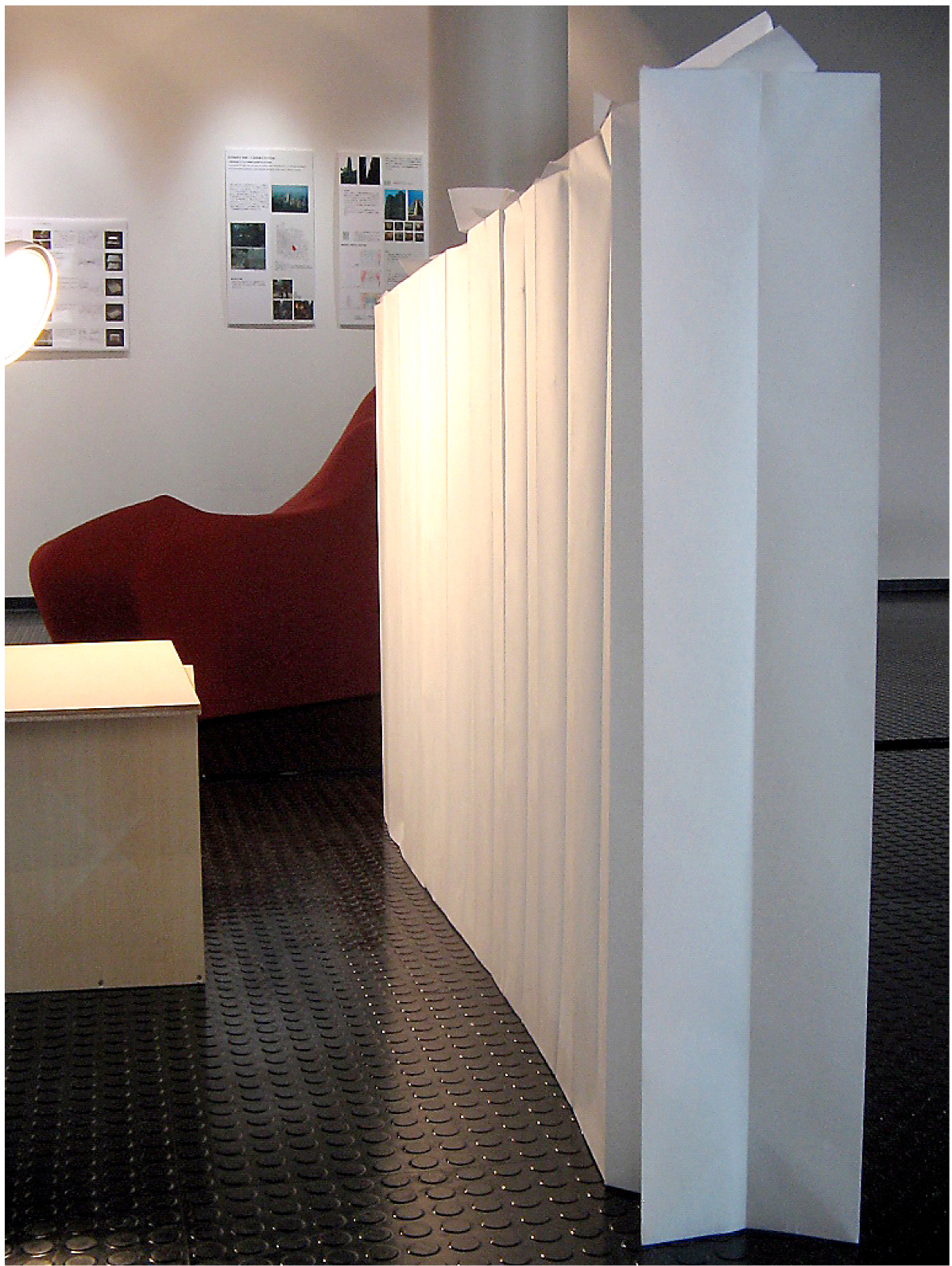
Construction
Only one material is used for it’s construction.
The partition stands by itself because of the rigidity of the material and the foldings.
No rails, no hinges, or wire is needed for its installation.
The partition can be extended up to the desired height or folded and compressed to store.
*(Fusuma: Opaque sliding doors. Consists of a wooden grid frame, and mostly has cloth
or apaque paper pasted in both sides. But it can admit other materials as well.
Usually used to divide japanese room from each other, and closet´s doors.
Fusuma admits colored materials and designs.)
*(障子 Shoji :Translucent sliding doors:
Consists of a skeleton of thin wooden strips arranged in rectangular patterns, framed by
wider strips over which paper is usually pasted. The paper lets the light get through.
Shoji doors and windows are used to divide interiors as well as for marking a interior–
exterior boundary. And to frame views.)
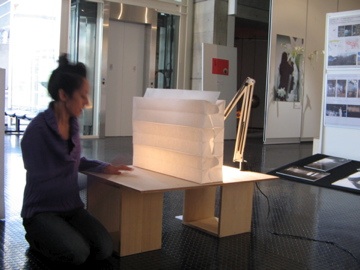
 INDOORS